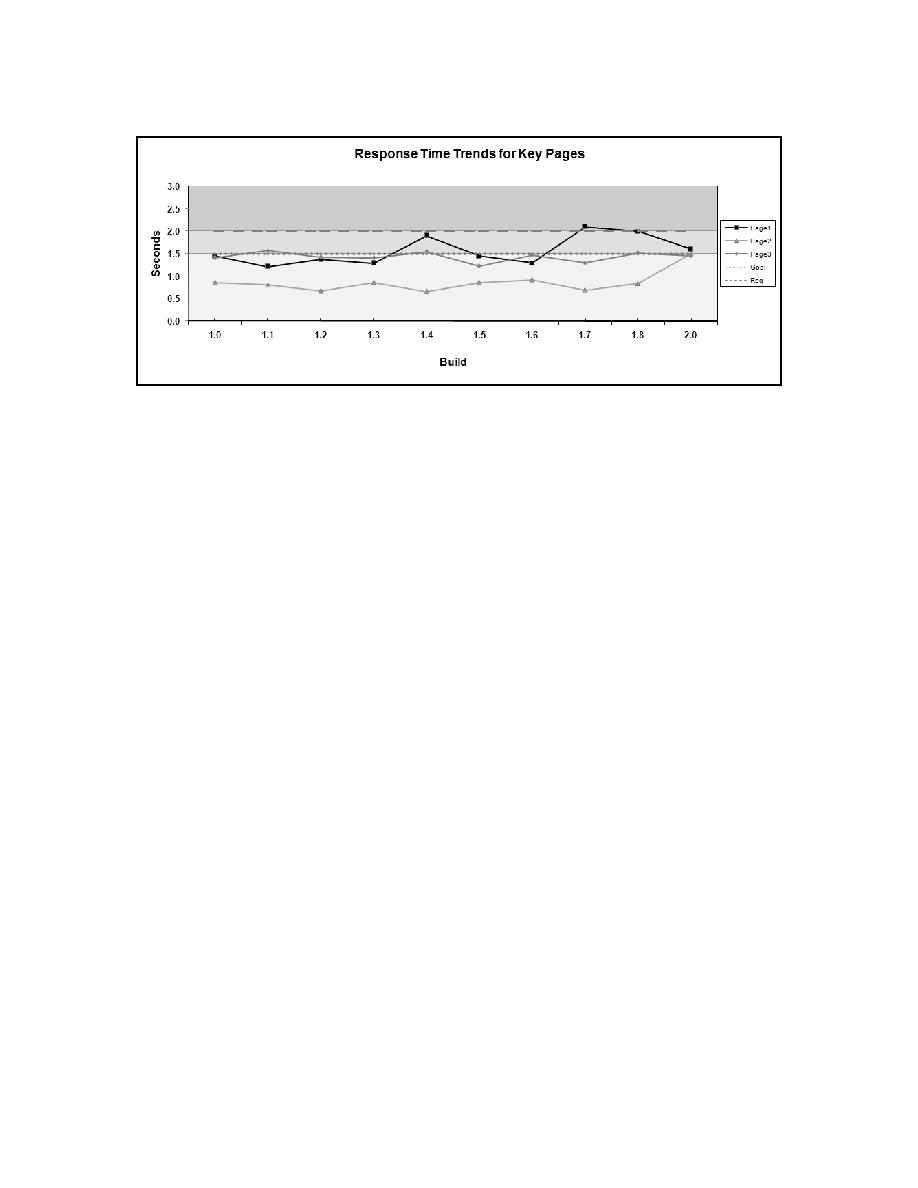

Response Time Trends for Key Pages
Figure 16.7 Response Time Trends for Key Pages
·
Sometimes trends cannot be effectively detected until there are more than three
measurements. Start creating your trend charts with the first set of data, but be
cautious about including them in formal reports until you have collected enough data
for there to be an actual trend to report.
This is another generally good practice, but it is particularly relevant to trends
because developers, architects, administrators, and DBAs often will have already
backed out a change that caused the trend to move in the wrong direction before they
are able to compile their report. In this case, you can decide that the trend report is not
worth including, or you can simply make an annotation describing the cause and
stating that the issue has already been resolved.
reporting data and results obtained through performance testing. While this makes
sharing information obtained through performance testing challenging, knowing what
various team members expect and value in advance makes providing valuable
information to the right people, at the right level of detail and at the right time, much
easier
·